 Spreadsheet
Kakobuy Spreadsheet reviews and buyer photos: counting is not checking
Hundreds of reviews and a gallery of buyer photos feel like proof. They describe other buyers’ claimed experiences. They cannot show yours, and they cannot see inside anything that stayed sealed.
What a review count measures

A review count measures how many buyers left a rating, usually on the source marketplace. Scroll through a few pages and most turn out to be a star and a handful of words. A count in the thousands can hide only a few comments that describe fit, colour or wear.
Buyer photos are better evidence than the shop's styled images, like the heart-frame set above. Look for photos taken in ordinary light, of the colour you want, with something for scale. Read the low ratings first: they tell you what goes wrong with this listing, and they are useful prompts for specific checks, although low ratings also need context.
Then remember who wrote them. Reviewers on the source marketplace mostly bought inside China and could send an item back to the seller directly. You are buying through an agent, the item travels to Xiamen and then abroad, and your return options are narrower.
Buyer photos versus the photos of your own item
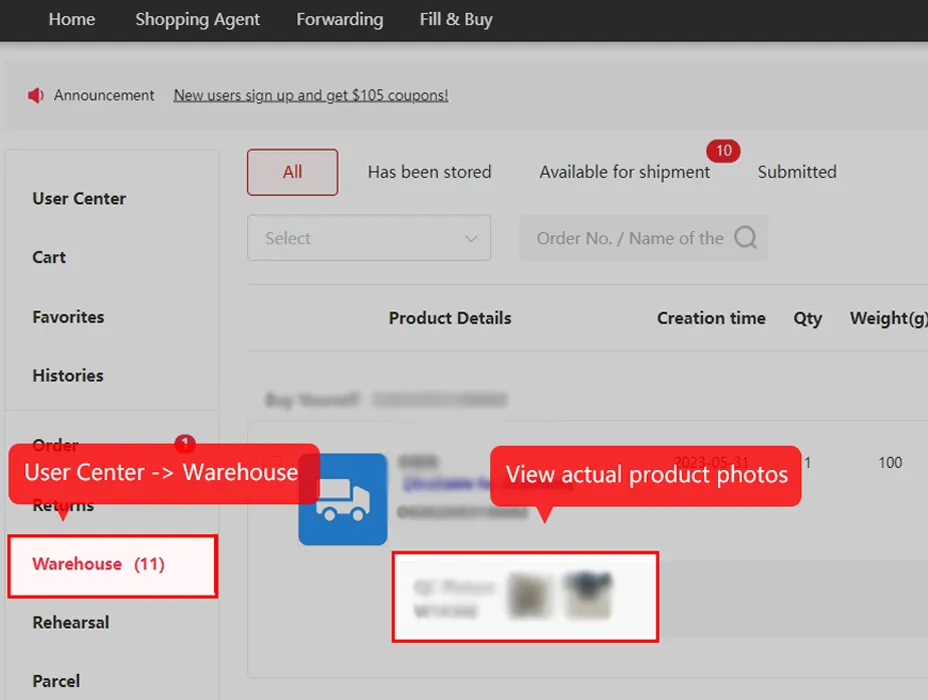
Every review photo shows somebody else's item. The only photos of your item are the ones Kakobuy takes when it arrives. You find them under User Center, then Warehouse, on the line for the item, marked QC Picture.
Compare your warehouse photos first with the selected variant and the seller’s own specification. Then use relevant buyer photos to identify questions. Differences in lighting, camera angle, variant or production date may explain a mismatch; the pictures alone cannot establish which explanation is correct.
The official help centre does not publish how many free photos you get per item, so do not plan around a number. If you need a specific angle, order it.
Reviews cannot see inside a sealed box, and neither can the warehouse
Help article 89 sets the limits. Kakobuy checks appearance: model, style and size. It opens only clothing, bags, suitcases and shoes. Anything in a sealed package or with a sealing strip stays closed, and for household appliances, digital products and other electronics the inspection does not include authenticity, function or quality.
So the review that says "smells right" or "battery lasts all day" is a claim about another item, not a test of yours. Weigh it accordingly. A thousand five-star ratings do not independently establish reliable shipping or product contents. They cannot tell you about the bottle in your box, because nobody in the chain opens it until you do.
The giveaway in the review photo
Popular listings often promise a freebie: a dust bag, a keyring, socks. Reviews show it, so you expect it. Help article 77 says giveaways belong to you and ship with your item, unless you give them up. It also says Kakobuy cannot make a seller send them.
The useful rule is the remark. If you note the giveaway when you submit the order, customer service can ask the seller for it and it gets inspected. If you do not, it is not inspected and it is outside after-sales. Even then, the quality of a giveaway is never covered. One line in the remarks box costs nothing and turns a review-photo promise into something Kakobuy will at least look for.
The 5-day window is where your own review starts
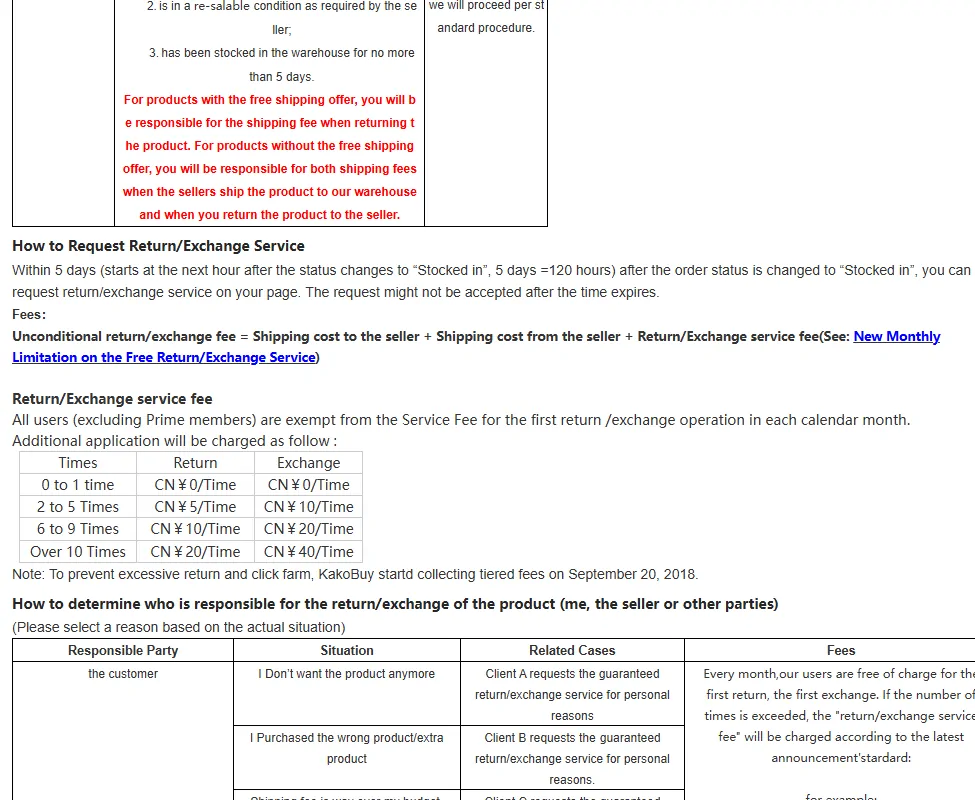
Your own verdict has a deadline. The 5-day return and exchange guarantee is a seller service on third-party platforms that Kakobuy relays. You request it within 5 days, counted as 120 hours from the hour after the order status changes to stocked in. The seller still has to agree.
The captured guarantee has product and condition exclusions, including customised goods, removed tags and some hygiene or sealed categories. Read the exact applicable rule rather than using a broad category name as a final decision. Return freight and service fees may apply; the published first-operation waiver also has eligibility limits. Check the accepted reason and cost treatment before authorising a return.
Treat the window as the moment to write your own review, for yourself: compare the warehouse photos against the order, then decide. QC and returns has the fee tiers and the full cancellation ladder.
Match the review to your option
A useful review identifies the colour or size, includes a date and shows the detail you need. A review of another variant can suggest a question, but it cannot settle that question for your order. Look for repeated, specific issues across more than one account.
When reviews disagree, preserve the difference
Two buyers can report opposite fits without either review establishing your size. Compare the actual option, stated measurements, review date and desired fit. A short “size up” comment is less useful for your decision than a measurement of the size being reviewed.
Turn the disagreement into a check: “What is the flat chest width of this selected size?” Compare the answer with a garment you own, then use your own item’s photos when it reaches the warehouse. A popularity vote cannot settle a measurement question.